
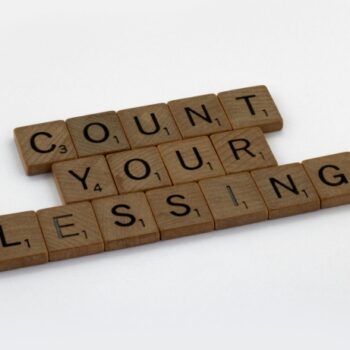
There’s a reason the Jewish value of gratitude is hakarat hatov in Hebrew, or “noticing the good.” By paying attention to the small mitzvot, and by cultivating gratitude for the everyday, we can create a world where blessings abound.
In Pirkei Avot, a book of maxims in the Mishnah, an ancient rabbi, Ben Bag-Bag said about Torah study, “Hafokh bah, va’Hafokh vah, d’khola bah.” Turn it over and over, for everything is in it. For two thousand years, that’s what Jews have done. Here is another turning.
Parshat Vaetchanan makes it clear that a place of refuge can look different for each person. What matters is not what or where the place is, but how we can be supportive of the environment that allows for refuge to take place.
In Pirkei Avot, a book of maxims in the Mishnah, an ancient rabbi, Ben Bag-Bag said about Torah study, “Hafokh bah, va’Hafokh vah, d’khola bah.” Turn it over and over, for everything is in it. For two thousand years, that’s what Jews have done. Here is another turning.

Interestingly, 70 of the 100 laws that are given in Devarim are brand new to the Israelite nation. It almost reads as though God is getting ready to send them off on an adventure and has a list of 70 last-minute reminders on how to be human before they can officially start this next phase of their lives.

This past week, as I was studying the weekly parashah, I got intellectually, morally, and politically stuck by a verse in this week’s Torah portion.

Like avoiding the cactus with her unseeable needles, the Torah reminds us to use precaution as we journey through life. The lesson is to recognize and rid ourselves of the insidious metaphorical needles of intolerance and ignorance. Those are the needles that do the most damage.